
About The Founder
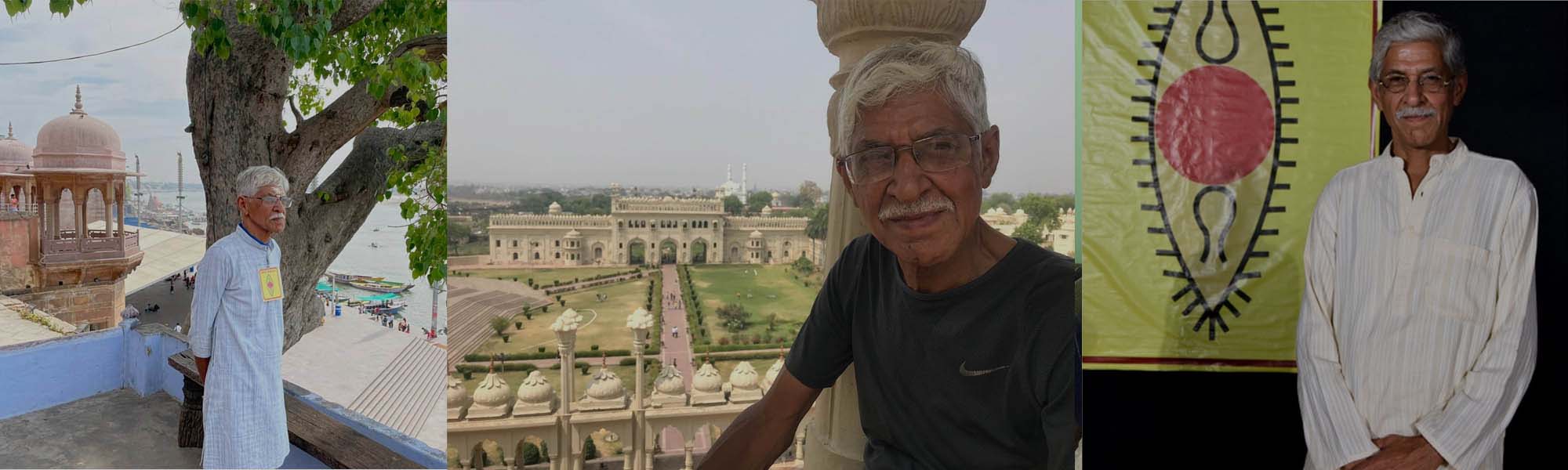
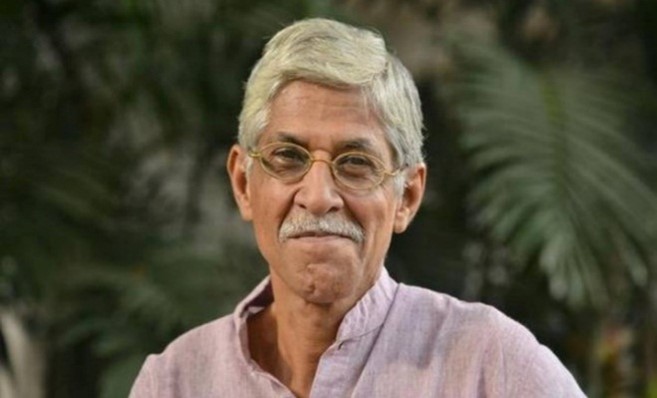
Born on April 27, 1949, Kiran Seth is well-known as an academician and Professor (now emeritus) in the Department of Mechanical Engineering at IIT Delhi.
He grew up in the vast wild campus of IIT Kharagpur in Hijli, Bengal where his father, Dr. B.R. Seth was amongst the first professors. His mother Bhagawathi Seth was a home-maker. During those early days of the first IIT of India, set up in Kharagpur, young Kiran along with his elder sister and brother was exposed to a variety of flora and fauna of West Bengal, some great teachers, luminaries in field of science and other lovely people.
Seth studied at St. Agnes School, which taught him discipline and cleanliness. After securing AIR 28 in JEE, he entered IIT Kharagpur. He was also one of the toppers of the Mechanical Engineering Department (B.Tech.) at IIT Kharagpur in the year 1970. Soon his father shifted as a Vice Chancellor to Assam, and he shifted to the hostel – the Azad Hall of Residence.
Seth says that IIT Kharagpur taught him how to reach the depths of a subject. The many avenues to experiment with, made available to him, brought him to sports, music and dramatics apart from pure sciences.
Seth also credits IIT Kharagpur for giving him the best he could possibly get during the most formative years of his life. Besides academics, which were world-class, Kharagpur put him in the company of some of the brightest and most thinking minds in terms of his fellow students and faculty members, who were continuously striving hard for excellence. All these put him on the road to discover what he defines as, the alpha domain, within himself, the domain of creativity and what lies beyond it, which is abstract, subtle, inspiring, and most importantly, mystical.
Initially, as a student at IIT, Seth was more interested in Western music. In his own words: “There was a person who used to conduct one whole night of classical music called “Green Amateurs’ Night”. My friends and I weren’t interested in classical music! We used to go there to see who had come and who had not, and then we’d sit at the back and play cards. But I think gradually, as I spent more time there, listening to classical music, it became sort of a starting point; the seeds were planted there.”
In 1972 Seth moved to the US for further studies. He was pursuing his doctoral program when one day a small advertisement in 'The Village Voice' caught his attention, announcing the Dhrupad concert by Ustad Nasir Aminuddin Dagar and Ustad Zia Fariduddin Dagar at the Brooklyn Academy of Music in New York organised by the Asia Society. He decided to go and ‘see’ that concert which ended up leaving an indelible mark on his mind. He recalls that after the concert was over, he came out of the hall walking one inch above the ground, not knowing how it happened or what had happened. It was like the black box – he had walked in and out and did not know what exactly took place within him in the intervening period - but he figured that if it could happen to him, it could happen to anyone! That particular concert ignited something in him that would result in the creation of something unimaginable.
Seth then decided to invite great classical musicians to his University under the aegis of the India Club of Columbia University to give a similar experience to the students there. He remembers the great Ustad Ali Akbar Khan playing the sarod at the Wollman Auditorium of Columbia University and many others who used to visit the place.
His training at IIT Kharagpur had made him do very well at Columbia University. He started his career working as a Member of the Technical Staff (MTS) at Bell Laboratories, New Jersey in 1974, a job he gave up to return to India in 1976, to teach and carry out research at IIT Delhi, where he served till his retirement in 2021.
However, he feels that by the time he returned to India, he had been bitten by the classical music bug. For instance, as a teacher at IIT, he always asked his students if anyone had heard just the name of one of the greatest sitar players alive at that time – Pandit Nikhil Banerjee. He would often get no answers or blank looks.
It was this lack of knowledge or awareness among the young people then which made him got his whole class involved in an experimental program at IIT Delhi. It was named MEFORG (Mechanical Engineering Final Year Operations Research Group). This group organised a classical music concert by one of the leading Dhrupad singers of the time – the Dagar brothers, at IIT Delhi’s seminar hall. The year was 1978. Unfortunately, not many students turned up; however, his belief in the saying, ‘Never say die’ did wonders. The Next year, MEFYS (Mechanical Engineering Final Years) arranged another concert that brought marginal success. It soon started getting momentum and started spreading, first to other colleges and schools in Delhi, then to other towns, and then to cities abroad, and took on the name of SPIC MACAY - Society for the Promotion of Indian Classical Music and Culture Amongst Youth.
Today, Prof. Seth is widely known as the founder of SPIC MACAY, which promotes Indian classical music, dance, and other aspects of Indian culture, amongst youth across the world.
Since its founding, SPIC MACAY has done a phenomenal amount of work in promoting Indian heritage among school and college students in India and in different parts of the world. It is the biggest, non-profit, voluntary, cultural, apolitical, youth movement in independent India, having made an exceptional contribution to the spread of Indian culture. It is due to the efforts of the movement that today, three generations of Indians are more aware of the different aspects of Indian heritage and have a deep appreciation for it.
The movement conducts thousands of concerts, lecture demonstrations, workshop demonstrations, talks, yoga, workshops, cinema classics screenings, theatre shows, in schools and colleges across India, for inspiring and awakening a cultural consciousness among the youth.
It has chapters in over 300 towns across India and abroad. Its intention is to enrich the quality of formal education by increasing awareness about different aspects of Indian heritage and inspiring young minds to imbibe the values embedded in it.
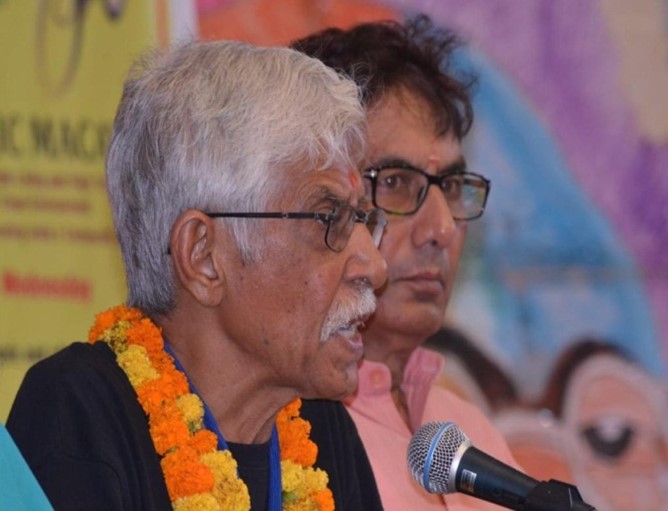
Prof. Seth remembers Prof. Siegmund, one of the top Statisticians in the world, who has an immense impact on him during his Ph.D. After his Ph.D., he came back to India and wanted to learn Dhrupad from Ustad Nasir Aminuddin Dagar in Kolkata. Both Prof. Siegmund and Ustad Nasir Aminuddin Dagar showed him the way of touching the alpha zone, an experience, which is beyond his description. From these Gurus, he learned the method of fathoming the depths of any great thought process and to whom he bows his head in reverence.
For his contribution to the Arts, in 2009, Prof. Seth was awarded the Padma Shri. He has also been accorded numerous other awards in his long and illustrious life.
Recently, he covered 10,500 km on his bicycle under a two year long solo cycling trip across India. He started his cycling on 15th August 2022, from Kashmir and reached Kanyakumari in February 2023 to celebrate India’s composite heritage, promoting cycling for good health, clean environment, spreading Mahatma Gandhi’s message of simple living and high thinking,and enrolling volunteers for SPIC MACAY. Later from Kanyakumari, he cycled all the way to Assam and then returned to Delhi in 2024.
The world of music and dance does not merely celebrate harmony but rather brings out our composite culture and our cultural traditions that have been built upon a belief that the search for the true note is a universal one.
Through SPIC MACAY, Prof. Kiran Seth truly promotes the concept of coexistence amidst peace and harmony, and he is a role model for today’s generation that lacks faith in culture and harmony.
Newton’s third law of motion states that for every action, there is an equal and opposite reaction. Conversely, there is the law of “nishkama karma” it says that for every action in which there is no embedded expectation, there is a reaction that is far greater than the action. This comes from a source other than that which is being acted upon. Newton’s third law can be experimentally proved while the law of “nishkama karma” can be proven experientially. Check out things through experience. It is a very powerful mechanism for validating the truth. Do put in ten percent of your time and money on something from which you don’t expect anything and watch the beautiful result. When we engage ourselves in voluntary work without expecting any tangible benefit, we benefit in an intangible manner. This is something we have forgotten today. Taking is in, giving is out. When we take, it affects those from whom we are taking, making them also want to take. On the other hand, when we give, others too are affected by the giving ‘bug’. Both giving and taking can be infectious. The difference lies in the fact that when we take, a certain tension builds up in the subconscious that does not allow us to fully enjoy what we have taken. Conversely, the giving person elevates himself immediately by sharing the joy experienced by the receiver. In addition, he gets back much more over a period of time from other sources. The principle followed is similar to Newton’s Third Law of Motion, with a slight modification. Any given action has a reaction that is more than the original action but comes delayed from the source other than that which is acted upon. True voluntary work is a fine example of this law of karma. People involved with such work have to face many difficulties but, over a period of time, they start emitting a glow that no money can buy. The Mahatma believed that what¬ever he possessed, including his body, mind, and spirit, was held in trust for the benefit of society. He considered himself the trustee and never felt like the owner. If we can incorporate even a small part of this concept in our lives by contributing to a true voluntary spirit to any positive effort, we will experience a joy that words cannot adequately describe.
An idea originates and finds someone through whom it can manifest itself. That fortunate someone, experiences during the birth process, a feeling which is beyond description. Imagine for a moment that you are witnessing the creation of the universe. The "big bang" of SPIC MACAY came in 1972.
Today the young person has got a lot of freedom to explore. With the internet, the mobile phone and the television the youth is being exposed to the best and the worst at a very early age. In previous generations, social and familial structures had created some norms based on the experience which had to be adhered to. But with globalization, all rules have broken down and the inexperienced teenager (or even sometimes the small child) is left to find her own way. There are many pitfalls to this availability of information and many unfortunate experiences which can be avoided if we have a wise guide who has traversed almost the same path as we are currently on. We call such a person a 'Guru'. Changing priorities in society have made true Gurus a rare commodity. Faith and patience have also taken a beating in the current atmosphere of instant gratification resulting in people not being able to recognize a great master even if they come across one. Consequently, the youth will have to also have to develop her inner strength to equip herself with the means to go through life relatively unscathed. Our heritage can construct this support system beautifully. It builds an anchor that pulls us back to shore when we are going through turbulent times. Previous generations had a relatively safe passage through life, but now the youth are being thrown into the deep blue sea which they have to learn to navigate largely by themselves. The key lies in them learning to connect with themselves. This is the art of ‘Yog’ which has been discovered in this great nation by our ancestors. If the youth all over the world could learn some form of 'Yog' their lives would become fuller and more meaningful. Let me explain with the help of an example—the man-woman relationship. This can bring the highest degree of selfishness. We are aware of the unhappiness that romantic relationships largely generate in the modern context. Knowing this we still run towards the flame like a moth, to experience fleeting moments of extreme pleasure at the cost sometimes even of death. The mind takes hold of us and leads us into the abyss. If we could somehow control this mind we could avoid such a situation. It is not that relationships are intrinsically bad. It is in the manner in which the mind makes us approach a relationship that makes it good or evil. If we could somehow direct the mind we could make relationships beautiful. 'Yog' helps us to do exactly that. By practicing any of its forms, the mind becomes 'Ekagra' (focused) and tends to obey the commands of its master more frequently. But this is not sufficient. So the practice does two more things. It cleanses the mind and also makes it subtle. With this, the subtle mind, being able to recognize the pitfalls in the abstract domain is able to guide the human being, taking her to unprecedented heights.
'Naad Yog' is one such technique developed using sound which manifests itself in our classical music. 'Hatha Yog' uses the physical body to help us achieve the same end. 'Bhakti Yog', 'GyanYog', ‘Raja Yog’ and many other paths experimented with extensively in this country can help us find our way. There is a very thin line of demarcation between what is right and what is wrong. The same situation can turn from right to wrong or vice versa in a split second. A controlled, pure and subtle mind can help us discriminate and can take us in the direction which will facilitate our inner growth. With so much disharmony in today’s society (which is a reflection of the disharmony within each individual), it is the need of the hour to develop ourselves internally.
One often wonders why our ancestors called the world an illusion when in fact it seems so real! Watching a close relative with her newly acquired daughter suddenly provided me with an answer. The mind keeps on flitting when actually we want it to be fixed as expressed in a Beatles song “To keep my mind from wandering”… This is an extremely difficult task and even after many years of medita¬tion, great people have failed in this endeavor.
Hence nature has worked out many little illusions that we can easily focus upon and thereby temporarily be in a state of bliss. When people get married, their immediate focus is on physical pleasures; when the newness of that dies down, nature brings in a child who takes up the attention of the parents.
As it grows up and requires less looking after, another one arrives and the process starts all over again. When we cannot get our minds hooked onto the real, nature makes sure that we latch on to one thing after another, which is unreal in the sense that it cannot give us sustained happiness. As a Buddhist text says, “The only meaningful life is a life which strives for individual realization absolute and unconditional of its own particular law to the extent that a man is untrue to the law of his being”. A true state of bliss is only possible when the mind has been stilled through deep meditation. In such a state one can realize why our great saints called the world ‘maya’.
Ustad Bismillah Khan was one of the finest human beings I have ever met. He was a great musician – we all know that. But he used music to transcend it. “Yeh to ek ibadat hai (This is just a prayer)”, he would say. He was on a different level, and it showed on his face – almost childlike and smiling. At namaaz time, he would request all guests to leave. He was one of the most beautiful examples of our composite heritage. Sitting with him in his small barsati room in Varanasi, he once told me that he was playing the shehnai on the banks of the Ganges one day when the Goddess Ganga rose out of the waters and blessed him for the lovely note that he had played. He narrated this with such conviction and glow in his eyes that I was moved to tears. Almost every time that I have sat at his feet and interacted with him, he has shaken me to the core. His complete faith in the spiritual domain irrespective of the religious order has always inspired me. Some of his quotable quotes are: “Hame paisa chahiye, par sirf paisa Nahin (I want money, but not just money)”; “Insaan ki pehchan hai uski jaban (A person’s character is determined by how she keeps her word)”. And he was one who lived by what he said. At the SPIC MACAY annual convention at Dehradun in the early nineties, Ustad Bismillah Khan was scheduled to give the concluding recital of classical music overnight. The whole group had been booked by a train reaching Dehradun, one day earlier. The tickets were waitlisted, but we had contacted the Railway Board to get them confirmed. This did not happen and the group could not board the train at Mughalsarai. We were very taken aback. Many people coming solely to listen to Khan sahib would go back disappointed. In those days, there was only one flight from Varanasi to Delhi (there were no flights to Dehradun), and there were no SUVs. The only way that we could have the whole group reach on time was to fly them down to Delhi and have a matador take them from the airport on a whole night journey to Dehradun. Very hesitatingly, I suggested this to Khan sahib on the phone. His reply was: “Jab hamne vayda kiya hai, hum use nibhayenge (When I have given a word, I will honor it).” He reached Dehradun in the early hours of the morning just in time for his concert. I suggested that we postpone his program to the afternoon so that he could rest a little. He asked me if people were there in the hall. When I replied in the affirmative, he decided to go straight onto the stage. He gave a memorable concert. That was Ustad Bismillah Khan.
I first met Khan Sahib in 1978 in Crown Hotel, Fatehpuri in Chandni Chowk. I had expected him to be staying at a five-star hotel, but when I went there, I found this unshaven man wearing a lungi and a baniyan, sitting on the floor. I had gone to request him to perform for the students. He heard me out, at the end of which he asked, “Par paisa kitna doge? (But how much money will you give?)” When I told him that we had only a small dakshina to offer, he immediately refused. I tried hard to argue with him, but he would not oblige. He said that he had a large family of his own and of his musicians to look after and that he would not perform unless he was paid properly. I had given up and was preparing to leave when he asked me to sit down. He talked to me some more, and realizing the genuinity of the effort, he finally gave his consent. This gave SPIC MACAY a boost. After that, he performed all over India for this movement. In fact, probably his last public appearance was at the SPIC MACAY convention in Jaipur on June 19th, 2006.
Like all human beings, he had his failings. His temper scared many people including his family and accompanists. However, he would become normal very soon and would never harbor any ill feelings towards anyone. The Padmashri, Padmabhushan, Padmavibhushan, Bharat Ratna and yet the ‘no airs attached’ Ustad Bismillah Khan will be remembered by us for a long long time.
As a child, my parents took me to many ashrams. I have fond memories of watching The Mother playing tennis at Sri Aurobindo Ashram in Pondicherry, of the smell of freshly baked brown bread and of witnessing the table football game there. I remember the serenity of the Shahenshahi Ashram in Rajpur, the beautiful bhajans of the Swamiji and the gushing waterfall not very far away. The Shivananda Ashram in Rishikesh was very special. Swami Chidananda had an all-pervading glow in his eyes. He would attract people without speaking a word.
As I grew up, I visited ashrams in different parts of the world all by myself. I went to the retreat of Swami Muktananda in the Catskill mountains in New York, stayed at a monastery in France where the monks meditated with Gregorian chants, practiced dhrupad at the ashram of Ustad Nasir Aminuddin Dagar in Kolkata and Ustad Fariduddin Dagar at Panvel, visited the gurukuls of Guru Ammanur Madhava Chakyar in Irinjalakkuda and Pandit Kishan Maharaj in Varanasi, attended a two –week camp at the Bihar School of Yoga in Munger and visited many other ashrams. The atmosphere of total giving at the Shivananda Ashram, the humility of the Abbot at the monastery in France, the intensity in Ustad Aminuddin Dagar’s ashram and the rigorous riyaz at Ustad Fariduddin Dagar’s ashram have left indelible marks on my being.
These experiences helped me realize that our ashrams are scientific laboratories whose inmates experiment with their lives, following the results of research carried out by our ancestors and directed step by step by the gurus. All of us do not have to live in an ashram but as Swami Niranjanananda Saraswati of the Munger ashram says, we should visit a true ashram at least once a year.
What we call spirituality is at one level a scientific method of applying distilled wisdom and information on a large scale. Perceptive people at various places at different points of time have verified this truth. We know that Einstein was a great scientist and Otto Hahn a great technologist, who converted his theories into an actual fission reaction to the atomic bomb that later engineers replicated for more useful purposes, namely atomic energy. Similarly, Jesus Christ was the originator of a number of great concepts that his apostles propagated as methods of good living; the church copied this prototype and spread it in an organized manner.
We could be the engineers who could use the ideas developed in different ashrams to enhance our own lives. Different methods have been developed to connect with our inner selves and each human being would have a natural preference for one particular method. The more the number of routes, the greater the number of people likely to reach the goal. Each true ashram provides us with a route traversed initially by the original master. Taking ideas from the various ashrams, we can come up with a route that is most suited for each one of us.
Today, young people visit different cities in the world during their vacations, take up fancy jobs or simply spend their leisure time. Very few visit ashrams. The SPIC MACAY National School Intensives are attempting to bring the ashram to the student. As the saying goes, if the mountain does not come to Mohammed, Mohammed must go to the mountain. The School Intensives are designed to give the students an experience of staying in the proximity of great masters in various areas of human endeavor, learning from them and watching them perform. May this experience enrich the lives of many of my young friends.
A young person today is much more aware than someone a few decades ago. This could be due to Darwin’s Theory of Evolution and the technological revolution. However, time is required for information to become knowledge. A greater time lag is needed for it to transform into wisdom. Once a direction becomes clear through knowledge, a lot of hard work is required to acquire wisdom. The process also needs patience, a certain degree of faith and an open mind, all of which are at a premium today. Consequently, a bright and hard¬working young person is likely to fall into the trap of ‘I know it all’. This forecloses the possibility of progress.Ustad Nasir Aminuddin Dagar would say, “Hum bacche ko chaalis saal takstage par nahin aane dete the, ¬kahin wo bhul na jaye wo kis liye gaa rahahai” (“We did not allow the disciple to go onstage till he was 40 years old, lest he forgot why he was singing”). The way to progress is not by rediscovering the wheel, but by improving upon the best wheel available with your ingenuity. To get that, one must have humility, patience and a desire to learn. No one says that questions should not be raised, but it is important to know how, when and where to raise them. A teacher carries a treasure that cannot be parted with so easily. The only who has the qualities mentioned above can access it. Once the depth of what he possesses is fathomed, the teacher will tell a deserving pupil to move on and search for deeper truths but till that time one must try not to jump the gun.
An era has ended with the passing away of Ustad Rahim Fahimmuddin Dagar. Artistes of his times like Pt. Malkarjun Mansur , Smt. Gangubai Hangal, Ustad Bismillah Khan, Pt. Ram Chatur Mallicik, Ustad Nasir Aminuddin Dagar, Ustad Asad Ali Khan & other’s used music to transcend the form. They had reached a stage when they had very few desires left. I remember visiting Pt. Ram Chatur Mallk’s residence in Darbhanga, Ustad Bismillah Khan’s barsati room in Varanasi & Smt. Gangubai Hangal’s little house in Dharwad. The common factor was the simplicity and bare minimum of creature comforts with which they seemed perfectly satisfied. Despite having very little, one did not get the faintest impression that they had missed out on anything in life.
Fahimsahib (as he was endearingly called) lived in a small flat in R.K. Puram. He seemed quite content living there with his Begum Sahiba. He was one of the last great musicians who understood Dhrupad intellectually & through it entered the spiritual domain. He would often say that the characteristics of a great musician was that he would have to process eight channels in parallel and then rise above them. He had to be Swaratmak, Ragatmak, Layaatmak, Taalatmak, Shabdatmak, Varnatmak, Bhavatmak and Rasatmak and also understand that finally Naad was Brahma. In fact he often ended a piece with the words ‘Naad Brahma’. His great father Ustad Rahimuddin Dagar often used to say “Jiska Iman Sacha Uska Swar Sachaa” (“One whose faith is true, his note will be true.”)
Entertainment has become a very big industry taking up a large portion of people’s lives. Even programs that have been developed with the inherent objective of elevating us are either mutating to become more acceptable or dying a slow death. Our classical music & Dhrupad, in particular, is one such casualty. Very few musicians have been able to retain that very special quality of deep introspection reflected through their music & Ustad Fahimuddin Dagar was one of them.
Swami Vivekananda once asked Swami Ramakrishna how he could also see God. Swami Ramakrishna replied that experience (anubhav) was one of the greatest aspects of life. It is through this that one can have a glimpse of the Almighty. He went on to say that Swami Vivekananda had read too much and that came in his way not allowing him to experience the truth. This day and age is particularly designed for ‘experience’. Faith has fallen to an all-time low and can only be revived in an individual by his or her own personal experience. And the experience has to be of the bad as much as it has to be of the good. The road to heaven lies through hell; hence one should not hesitate to experience the worst, keeping in mind at all times that one must not be caught midway. This is possible by having an anchor and one method of getting it is through any form of meditation. There are thousands of different forms of meditation developed in India over the ages, and SPIC MACAY seeks to give our youth glimpses of these.
SPIC MACAY, recently concluded its International Convention at IIT Delhi commemorating forty years of the movement . When we started at the very same precincts most people were of the opinion that there were many more important problems that faced humankind. Many of my colleagues, friends and relatives often asked me the question (without actually asking me) as to why I was wasting my time on 'Gaana Bajaana' when I could use it to do good research work. I must admit that I was often very confused and did not know whether I was on the right track, but some intuition kept me going. It seemed that society at large was moving in a direction in which there was belief only in what one could actually see. The intangible domain was slowly becoming either non- existent, or was being treated ritualistically, without an understanding of either its depth or importance. The intuitive impulse has grown in the last 40 years into an understanding (of the order of delta, delta tending to zero) of what SPIC MACAY is actually trying to achieve, which seems almost impossible in the present day scenario.
The reason is that, for an understanding of the depth of the philosophy which has been passed down to us through great penance by our ancestors, there are two prerequisites, patience and faith, both of which are at a premium in this day and age. The goal is very abstract, subtle, inspiring and most importantly mystical. Imagine trying to experience the effect of a black hole in the universe. A great effort would be required to send a probe in thedirection of what might be a black hole till a certain point after which it would be taken over and would completely disappear once it touched the event horizon. Traditionally, it has been the Guru who has helped chart the very difficult course of the shishya's probe. There is therefore the very well known Guru Mantra: "Guru Brahma, Guru Vishnu, Guru devo Maheshwara, Guru sakshat, param Brahma, tasmai shri guravay namah." Through various yogic techniques, using the body (hatha yog), breadth (pranayama), intellect (gyan yog), sound (naad yog - our classical music) and many other methods, theconcentration of the shishya is made like a laser beam. The most appropriate technique for each individual shishya is chosen, directing the inner probe towards the goal, with the hope that some day she would actually be able to experience the effect of the black hole. The faith that something like this can actually happen comes down drastically because the idea of a Guru is fast disappearing(this is because very few real Gurus are left). Hence thebrightest in society opt for a technical education with the singular aim of a better material life. Learning and experiencing traditional arts does not even ensure basic subsistence. This even leads some artists to take the compromised route to commercial success.
Historically, the processes which resulted in the birth of SPIC MACAY may have begun at the Sunday 'havan' which my father, a top Mathematician, would conduct. The whole family would participate, reciting Sanskrit slokas which we understood very little of. This was coupled with my schooling experience at Modern School, Delhi. The principal, Shri M N Kapur, suffused students’ lives with a balanced composition of the disciplines of both thearts and sciences. The finest of our arts in the realms of classical music , dance, theatre and the fine arts were an integral part of our learning process . In contrast, IIT Kharagpur, where I graduated, was caught by the western pop music fad. We were into the Beatles, Pink Floyd, Bruce Springsteen and others. Yet, a persistent staff member organized an annual all night event of Indian Classical Music that we attended for a lark, and the SPIC MACAYseed was unconsciously sown. This had enormous transformative powers in the subconscious mind. I was in the US pursuing my doctoral program when, in 1972, a small advertisement in 'The Village Voice' caught my attention, announcing the Dhrupad concert by Ustad Nasir Aminuddin Dagar and Ustad Zia Fariduddin Dagar at the Brooklyn Academy of Music in New York organised by the Asia Society. The concert left an indelible mark on me and I still remember how uplifted I felt hearing them sing 'Poojan chali Mahadev......' in raga Malkauns.
This must have been the turning point. A group of us started organising concerts of top Indian artists passing through New York under the aegis of our India Club of Columbia University. Great maestros, like Ustad Ali Akbar Khan performed at the Wollman Auditorium of the University. After thecompletion of my PhD in 1974, I joined Bell Labs in New Jersey and by then, I had even started learning Indian classical music. In 1976, when I returned to India to teach at IIT Delhi I asked a group of my students if they had ever heard of Pt. Nikhil Banerjee, one of the greatest sitar players at the time. The presumably brightest, urbane and well-informed core of society had never heard of him. This must have been the second trigger for me. I got together with two of my lovely batchmates, Arjun Malhotra (from IIT Kharagpur) and Mahendra Malu (from Columbia University) and a dynamic Hindu College student, Babi Barua at the residence of Arjun's mother in the campus of Maulana Azad Medical College in 1977 and the concept of SPICMACAY was born.
The first Indian concert that we organised in early 1978 by MEFORG (Mechanical Engineering Final year Operations Research Group) was a disaster with hardly 5 to 10 people in the 1200 seater auditorium. In the next year I got the whole batch involved and the MEFYs (Mechanical Engineering Final Years) program was a marginal success. In that very year, the name SPIC MACAY (The Society for the Promotion of Indian Classical Music And Culture Among Youth) was launched with a program in Delhi University. It is remarkable that, soon after, the movement spread organically with my students and others writing in to do programs in the cities to where they had shifted. A student from MACT ( now called MANIT) in Bhopal, Sunil Malhotra, started the first chapter abroad with a program by Pandit Jasraj at the University of Hartford in Connecticut where he had gone to do his MBA, followed up closely by a very big initiative of spreading SPIC MACAY all over North America by an ex - Stephanian, Rao Rohit Singh.
Today, SPIC MACAY is conducting thousands of events every year in about 500 towns in India and abroad by some of the greatest exponents of thearts. These include classical music and dance, folk, theatre, screening of cinema classics, yoga and meditation workshops, craft workshops, heritage walks, exposure to world heritage and even holistic food. Given the turmoil that the world is going through, SPIC MACAY has started a special module at its conventions called 'Music in Prayer', with the objective of presenting before the youth, a variety of inspiring roads leading to the same goal, which have been developed in different parts of India and the world. In the recently concluded Convention at IIT Delhi, elevating performances of Qawwali by the Rampur Warsi Brothers, Sacred music by the Capital City Minstrels and Gurbani by Shri Alankar Singh were presented.One never knows which road would suit which young person to take him or her to the common goal!
My own journey through SPIC MACAY is not just about the concerts but has been a deeply moving experience. I was greeted, in the residence of thegreat dhrupad singer, Pt. Ram Chatur Mallick in Darbhanga, by two tanpuras, a cot, a bicycle and a smiling face, all in one room. Smt. D K Pattamal in Chennai, radiated her warmth in every corner of the simple house where she was bed ridden. Guru Ammanur Madhava Chakyar in theVadakkannathan temple in Thrissur, took me on his journey through koodiyattam and the beyond. The pure, twinkling eyes of Ustad Bismillah Khan, Swami Chidanand ji's simple and yet profound discourses at the Swami Shivanand Ashram in Rishikesh and Ustad Nasir Aminuddin Dagar in his tiny Ashram in Kolkata, giving me a glimpse of the heights to which our classical arts can take us to, are memories which will stay with me forever.
SPIC MACAY needs multi-layered nourishment to sustain its path to its goal. We need the excellence of artists, the vibrant partnership of educational institutions, the financial support of those who can share our vision and thousands more to join SPIC MACAY’s voluntary spirit, if we have to succeed in our mission of taking our heritage to every child in the country.